
Hurricane prep for sliding doors
Your sliding glass door is the biggest opening in your home. See how to get it ready, where water gets in, and what to do after the storm.
Atlantic hurricane season runs June 1 to November 30.
What "storm ready" looks like
Drag the handle. Same house, one day apart.
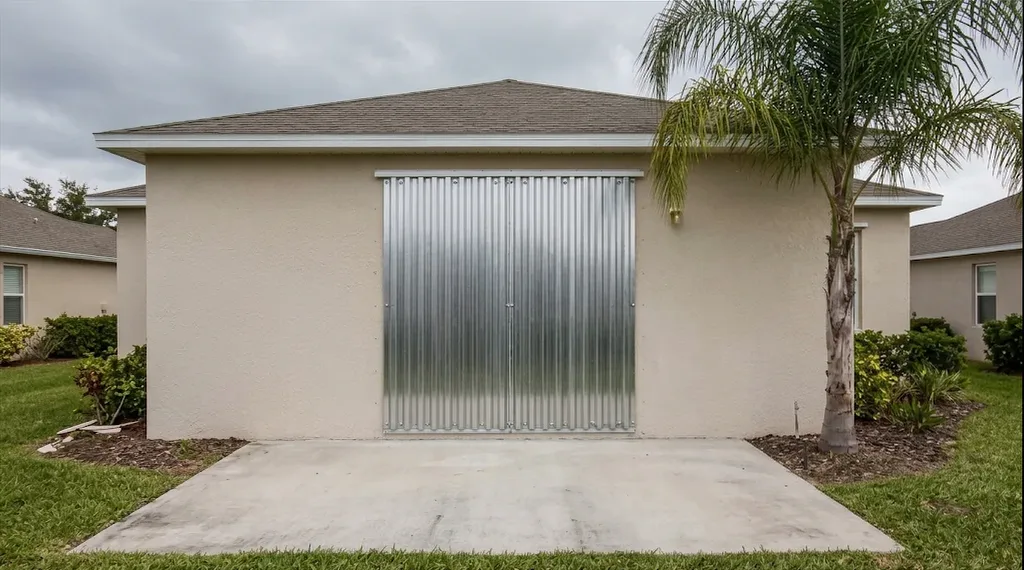
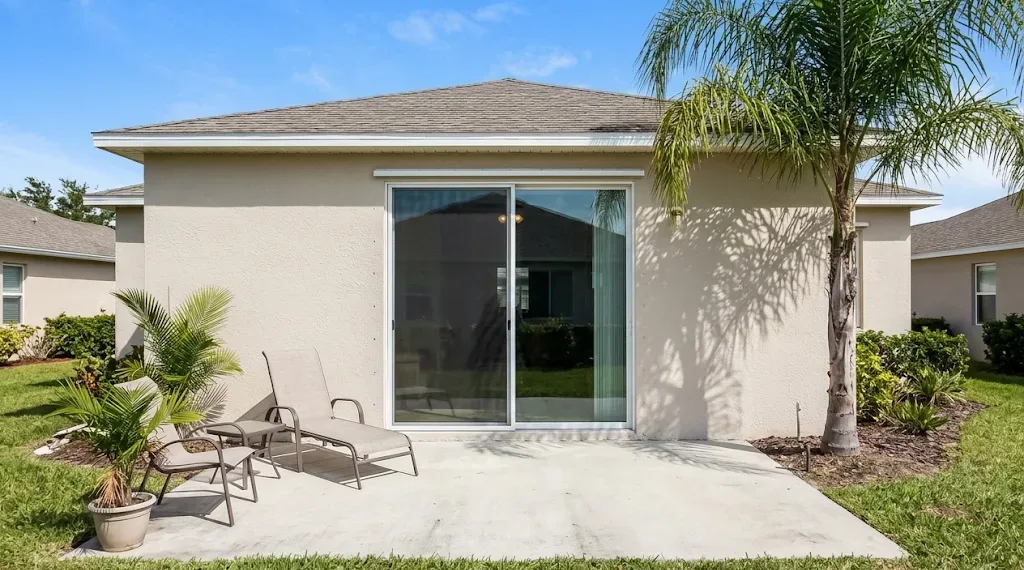 Normal dayStorm ready
Illustration.
What changed
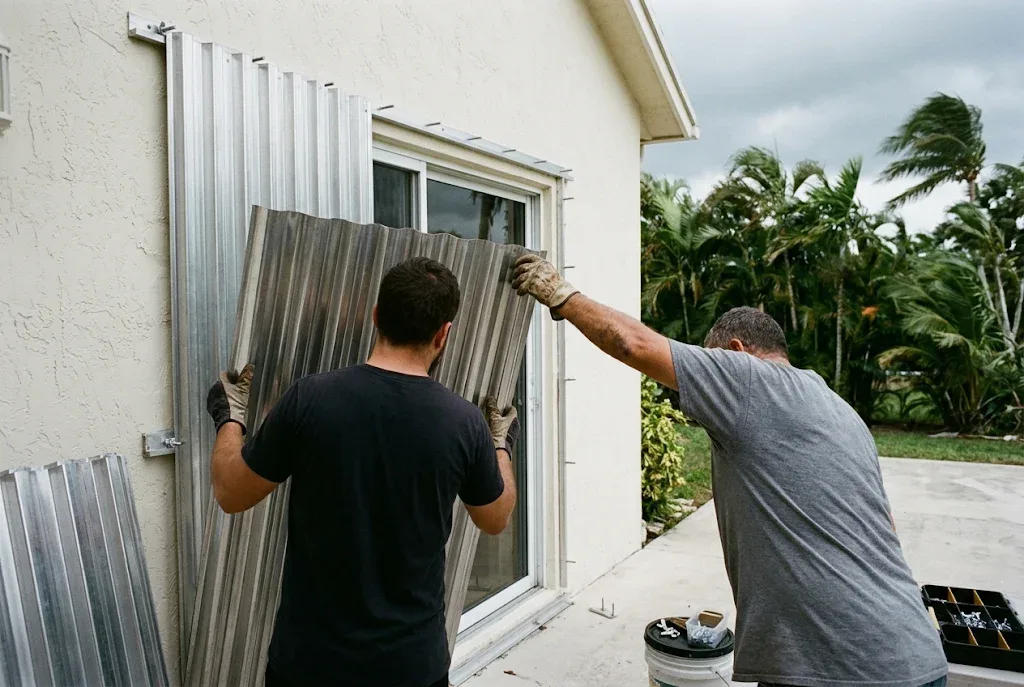
- 1Storm panels cover the glass
Flying debris is what breaks sliding doors. Rated panels or shutters stop it.
- 2The patio is empty
Chairs, tables and pots become projectiles. Everything loose goes inside.
- 3The door is closed and locked
Locked panels sit tight against their seals and resist wind pressure.
- 4The track is clean
Clear weep holes let wind-driven rain drain out instead of in.
Where water gets in
Tap a number to see how wind and rain get past a sliding door, and how to stop it.
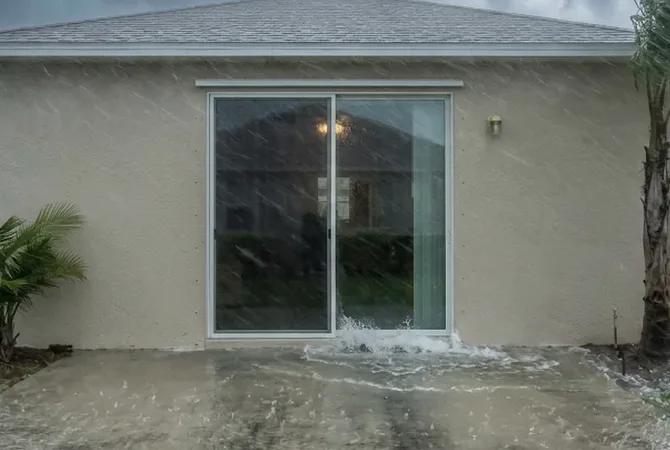
The glass
How it gets in: Flying debris is the main threat to a sliding door. Standard tempered glass shatters when it is hit, and once the opening is breached, wind and rain pour into the house.
Before the storm: Cover the door with rated storm shutters or panels. Impact-rated glass is built to stay in its frame when struck, so it does not need covering.
Bottom track
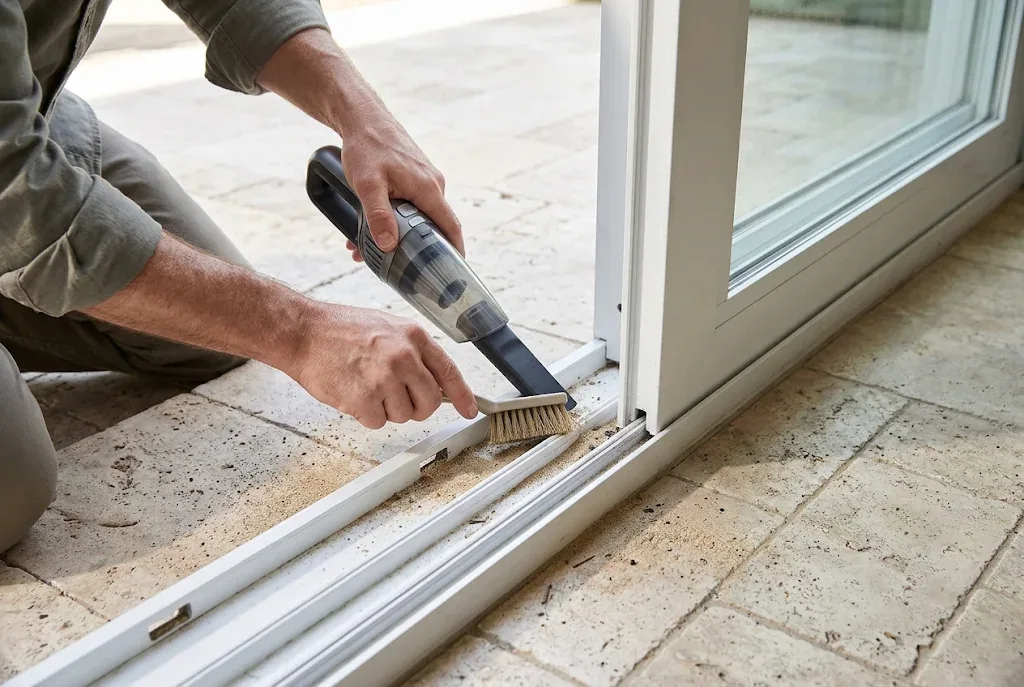
How it gets in: Wind pushes rain against the door faster than the track can drain it. Water climbs over the inner lip of the track and onto your floor.
Before the storm: Clean the track so it drains at full speed. Before the storm arrives, lay rolled towels along the inside of the door.
Weep holes
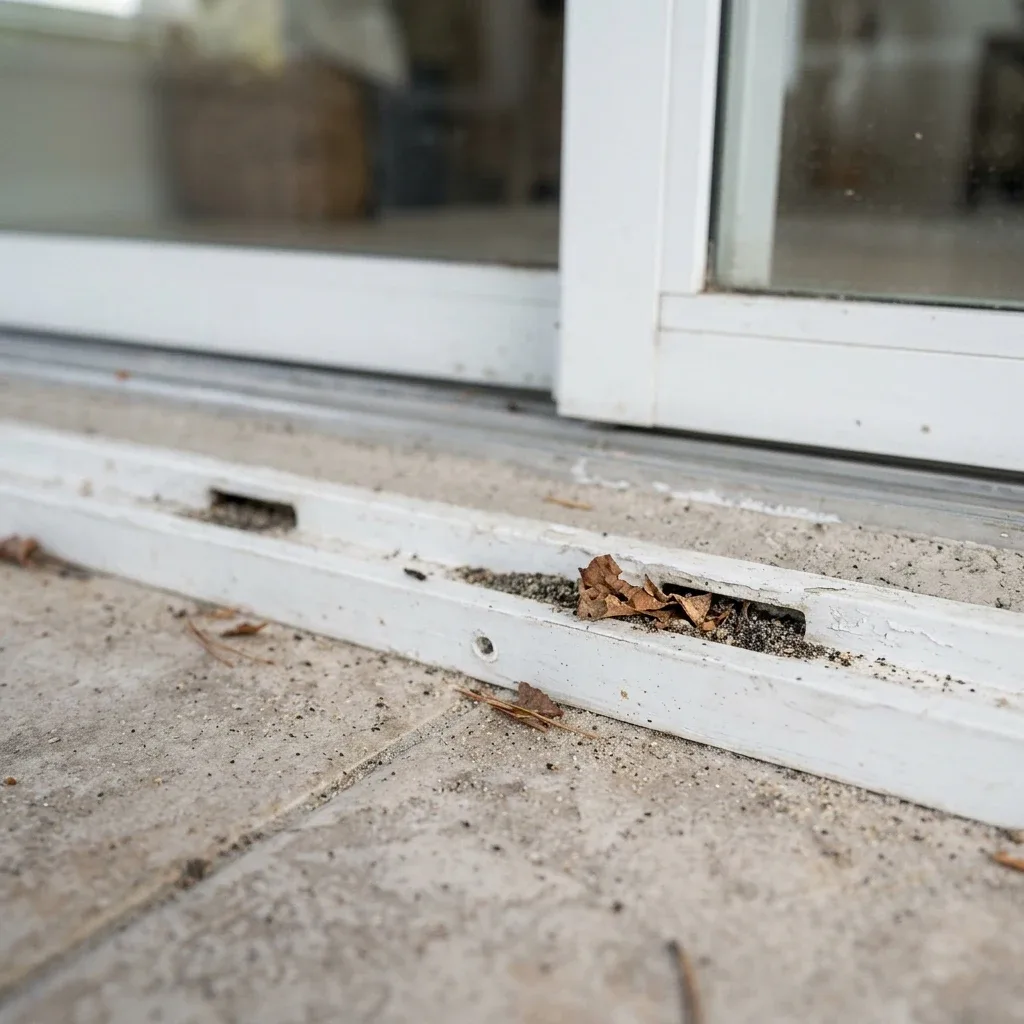
How it gets in: Weep holes are the drain slots on the outside of the track. When they clog with sand and leaves, water has nowhere to go but inside.
Before the storm: Clear each slot with a small brush. Then pour a cup of water into the track: it should drain outside within seconds.
Where the panels meet
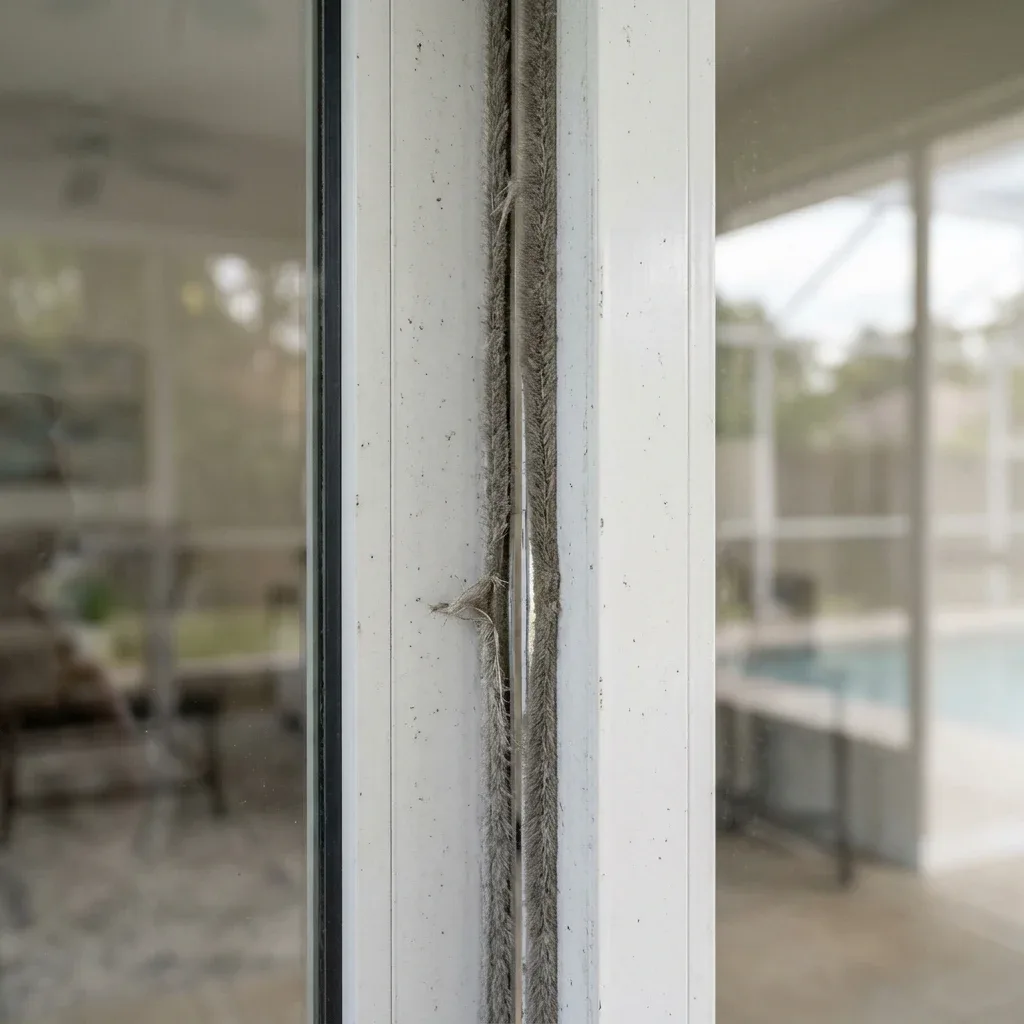
How it gets in: Wind drives rain sideways through worn or torn weatherstrip between the two panels.
Before the storm: Replace flattened or torn weatherstrip before storm season. Close and lock the door so the panels sit tight against their seals.
Lock side
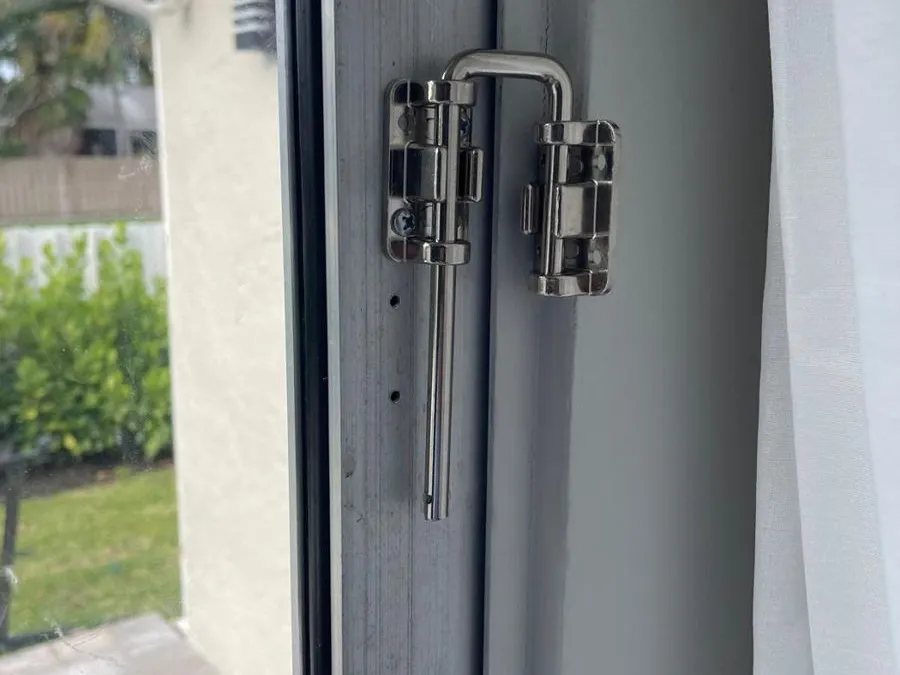
How it gets in: Wind pushes and pulls on the panel for hours. A latch that barely catches can let the door rattle and open a gap.
Before the storm: Make sure the lock catches firmly and the door cannot be pulled open. Fix a latch that misses before the season starts.
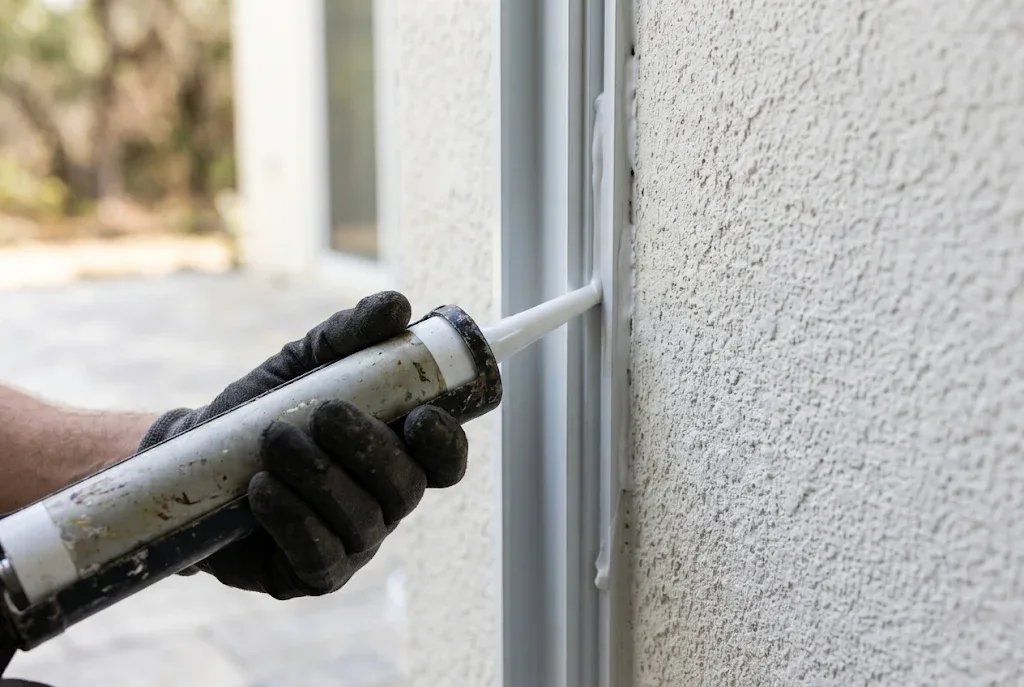
Around the frame
How it gets in: Cracked sealant or failed flashing where the frame meets the wall lets water into the wall itself. It shows up later as stains, soft drywall or mold.
Before the storm: Look for gaps and cracked caulk around the frame and reseal them in dry weather. Stains near the door after a storm mean a pro should check the wall.
Illustration. Some water at the track is normal in extreme wind-driven rain, even on a good door.
What to do, and when
Tick things off as you go. Your list is saved on this device.
Download the printable checklist (PDF)
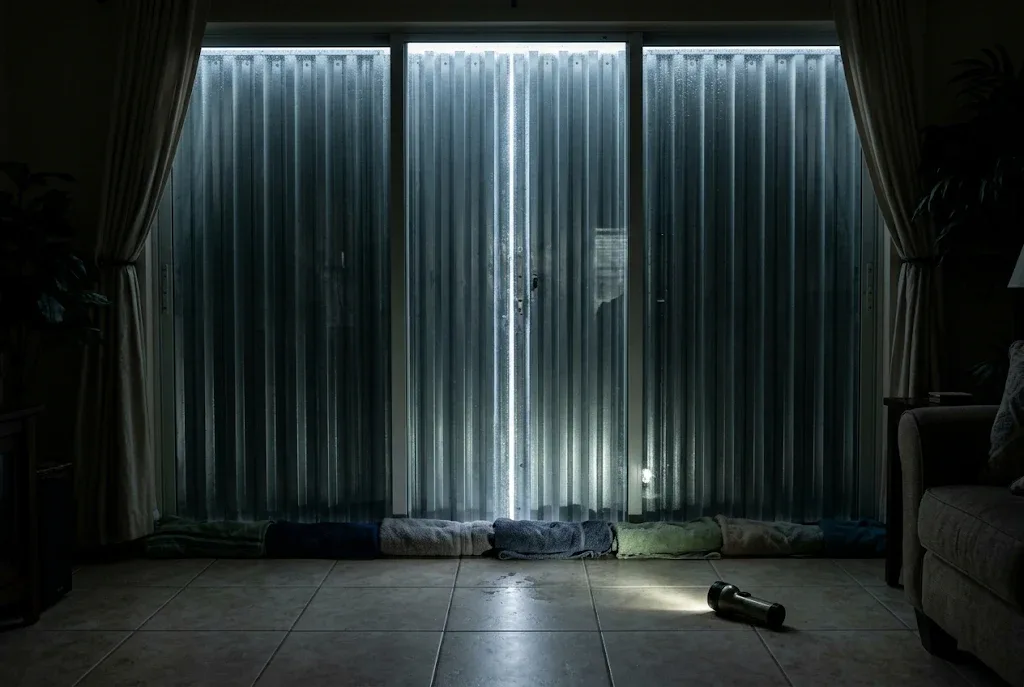
Three days out: get the door ready
A storm is in the forecast. This is the time for anything that needs tools, parts or a pro.
One day out: cover and clear
A hurricane warning is up. Finish the outside work in daylight.
During the storm: stay away from the glass
The door is doing its job. Yours is to stay clear of it.
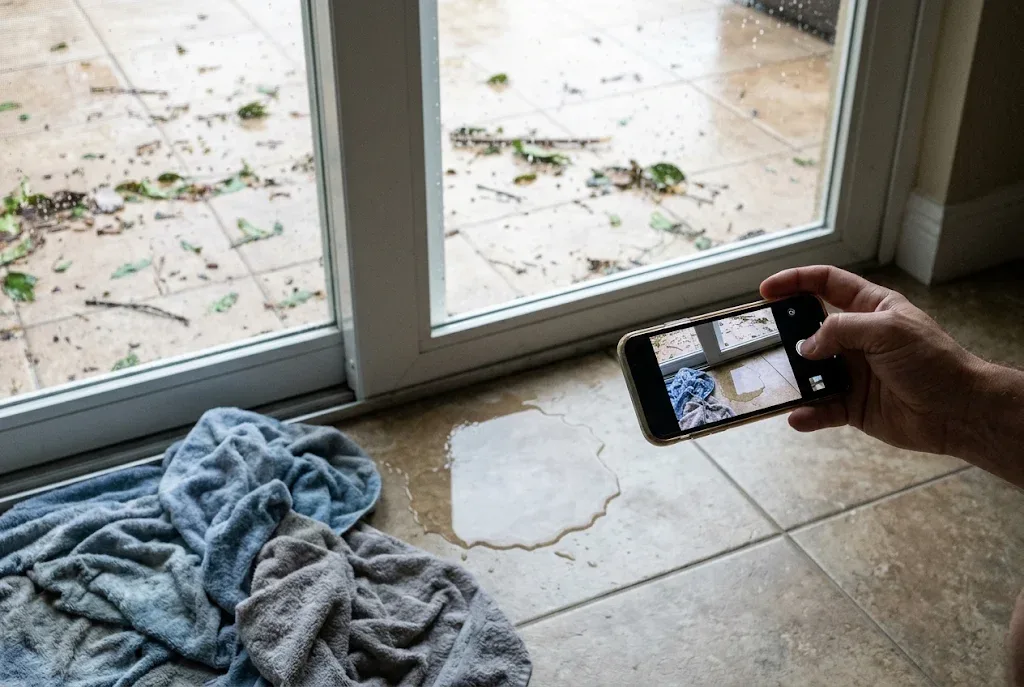
After the storm: check, photograph, then clean
Wait until officials say it is safe. Then go slowly.
Your safety comes first. Follow your local emergency officials. If you are told to evacuate, go. No door is worth staying for.
Storm damage? Send a photo
Tell us what happened and send a photo of the door. A sliding door pro will text you back with what they see.
Got it, thank you.
A sliding door pro will text or call you soon.
Hurricane and sliding door FAQ
Should I tape my sliding glass door before a hurricane?
No. Tape does not make glass stronger and does not stop it from breaking. It can also hold broken glass together in larger, more dangerous pieces. Use rated shutters, storm panels or impact glass instead.
Do impact sliding doors need hurricane shutters?
A door with a current impact rating is designed to be the storm protection, so it does not need shutters. If you are not sure your door is impact rated, treat it as if it is not and cover it.
Why does water come in under my sliding door during a storm?
Wind pushes rain against the door faster than the track can drain. Clogged weep holes and worn seals make it much worse. Clean the track, clear the weep holes and lay towels along the inside before the storm.
Should I open a door or window to equalize the pressure?
No. Opening a door or window lets wind and rain into the house and can cause far more damage. Keep everything closed and locked.
Can a sliding door be repaired after a hurricane?
Usually, yes. Rollers, tracks, locks, seals and even the glass can be replaced in the existing frame. A frame that is bent or pulled from the wall normally means a new door.
Filing an insurance claim?
What to photograph, what to write down and the Florida deadlines.
Open the claim helper →Not sure if your door is impact rated?
Look for the small etched stamp in a corner of the glass and a label on the frame. The Door Explorer shows where.
Open the Door Explorer →